

Table of Contents
- Before You Start: Getting Kids Ready to Measure
- How to Measure Kids for Clothes: Chest, Waist, and Hips
- How to Measure Kids' Pant Size and a Child's Inseam
- How to Measure a Child for a Dress
- Reading a Kids Clothing Size Chart
- Common Measurement Mistakes and How Often to Remeasure
- Frequently Asked Questions
Last Updated: October 17, 2026
Before You Start: Getting Kids Ready to Measure
Learning how to measure kids for clothes starts with one simple truth: the tape measure matters less than the child wearing it. A squirming toddler and a stiff tape produce the same result, a size that fits nobody.
You need very little to get started. The American Academy of Pediatrics guidance on child growth confirms that children grow at very different rates, which is exactly why body measurements beat guesswork every time.
What You'll Need
- A soft tape measure, the flexible cloth kind used for sewing
- A growth chart or wall marks for height
- A flat wall and a hard floor
Skip the metal tape from the toolbox. It doesn't bend around a chest or waist, and the edges can pinch.
Helping a Child Stand Still Long Enough to Measure
Most parents lose the battle before the tape comes out. The fix is timing and framing, not discipline. Measure after breakfast, never before a nap or at the end of a long day.
Try these approaches:
- Turn it into a game: "Stand tall like a superhero" works better than "hold still"
- Measure in front of a mirror so she can watch
- Give her a job, like holding the end of the tape
If your child truly won't cooperate, measure a well-fitting garment instead. Lay a favorite shirt flat, measure across the chest, and double it. It's not perfect, but it's close.
How to Measure Kids for Clothes: Chest, Waist, and Hips
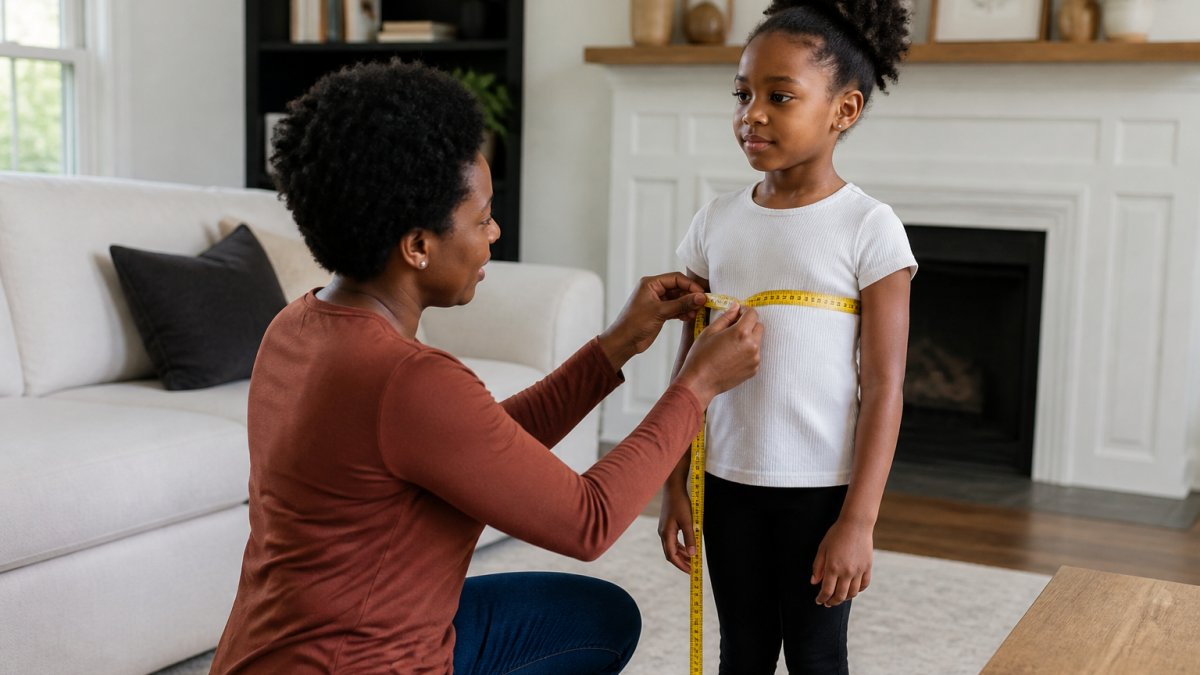
The three core measurements, chest, waist, and hips, decide most fit problems. Take them over fitted clothing, keep the tape snug but never tight, and record everything in inches.
Chest and Waist Circumference
Chest circumference is the distance around the fullest part of the chest, measured under the armpits.
Waist circumference is the distance around the natural waistline, the narrowest point above the belly button. Find it by bending the child slightly sideways, the crease that forms marks the spot.
Keep the tape level all the way around. A tape that dips at the back adds phantom inches and pushes you into a larger size.
Hip Circumference and Height
Hip circumference is the distance around the fullest part of the hips and seat, usually about 6 to 8 inches below the waist for children. Stand to the side to check the tape stays parallel to the floor.
For height, have her stand straight against a wall with heels together and no shoes. Mark the wall at the top of her head and measure from floor to mark.
How to Measure Kids' Pant Size and a Child's Inseam
Pant sizing trips up more parents than any other category, because waist and length are separate numbers. A child can wear a 6 waist with a 5 length, and that's completely normal.
How to Measure a Child's Inseam
Inseam is the distance from the crotch seam to the bottom of the ankle. The easiest method is to measure a pair of pants that already fit: lay them flat, measure from the crotch seam straight down the inner leg to the hem.
To measure on the body, have the child stand straight with feet slightly apart. Measure from the crotch down the inside of the leg to the ankle bone.
How to Measure a Child for a Dress
Dress sizing needs three numbers: chest, waist, and full length. Full length runs from the top of the shoulder, over the bust, down to the hemline you want, whether that's knee-length or floor-length.
For a dress with sleeves, add sleeve length, measured from the shoulder point to the wrist bone with the arm slightly bent.
Measure dresses over the undergarments she'll actually wear. A dress fitted over a bulky sweater will read one size too big.
Reading a Kids Clothing Size Chart
A kids clothing size chart converts body measurements into a size label, and no two brands build theirs the same way. A 5 in one label can match a 6 in another, and a 4T from a mass retailer often runs a full size smaller than a 4T from a boutique brand.
Most charts list chest, waist, hip, and height in inches next to a size label. Read them in this order:
- Height first. Height is the least forgiving measurement because it drives sleeve, inseam, and dress length, and those are the hardest alterations.
- Chest and waist second. These decide whether the garment closes and sits properly.
- Hip last for bottoms and dresses. Hip determines whether pants pull on and whether a skirt hangs straight.
Find the row where the most measurements land. If height points to a 6 and chest points to a 5, you have a decision to make, not a chart error.
When Measurements Point to Two Different Sizes
Conflicting numbers are the norm, not the exception. Use this decision order:
| What conflicts | Which measurement wins | Why |
|---|---|---|
| Height vs. chest | Height for sleeves, dresses, and one-piece outfits | Length cannot be added later; a roomy chest still wears fine |
| Waist vs. hip | Hip for pants and skirts | A waistband can be cinched or taken in; a too-small hip will not pull on |
| Chest vs. waist on tops | Chest | Shoulder and armhole seams are fixed; waist can be looser |
| Inseam vs. waist on pants | Inseam if the child is long-legged | Hemming is easy; adding length is not |
When the conflict is close, size to the larger measurement for outerwear, sleepwear, and anything worn over other clothes. Size to the smaller measurement for swimwear, base layers, and fitted formalwear, where a loose fit looks wrong and fabric has some give.
Age Labels, Toddler Sizes, and Brand Variation
Age ranges are a starting point, not a rule. Two children the same age can wear sizes two apart, and the American Academy of Pediatrics guidance on child growth notes that healthy children grow at widely different rates.
Toddler sizes (2T through 5T) are cut shorter in the leg and roomier through the seat to accommodate diapers and pull-ups. Kids' sizes (4 through 16, plus 6X and 7) are cut slimmer and longer.
Brand variation is real and predictable in direction, if not in degree. Before ordering from a brand you have not used, check whether its chart lists body measurements or garment measurements.
Buying as a Gift or Without the Child Present
When you cannot measure the child, ask for height and weight first, then waist and inseam if the parent knows them. Height and weight alone get you close for tops and dresses; bottoms need a waist or a current pant size from a brand the family already buys.
Check the FTC guidance on clothing labels and care for what care tags must disclose, since fabric shrinkage after the first wash can erase the room you built in.
Common Measurement Mistakes and How Often to Remeasure
The same errors show up again and again, and each one shifts the number in a predictable direction. Knowing which way an error skews lets you catch it before you order.
The Five Errors That Change the Size You Buy
1. Measuring over thick clothing. A sweatshirt can add an inch or more to the chest and waist.
**2.
3. A tape that is not level. A chest or waist tape that dips at the back adds phantom inches, because the low point measures a wider part of the body.
4. Measuring with arms down. Arms at the sides compress the chest and pull the shoulder blades together.
5. Measuring the wrong waist. The natural waist is the narrowest point above the belly button, not where the pants sit.
How to Tell a Measurement Is Wrong
You do not always need to re-measure to catch a bad number. Three signals suggest a reading is off:
- The number jumps a full size from the last measurement taken weeks earlier. Real growth happens, but a sudden full-size jump usually means a technique change, not a growth spurt.
- Chest and waist land in different size rows by two or more sizes. That pattern is possible, but it is more often a sign that one measurement was taken over the wrong clothing or at the wrong point.
- The garment the child currently wears measures very differently from the new numbers. Lay the well-fitting garment flat and compare. A large gap means one of the two is wrong.
When in doubt, measure a garment that already fits and compare it to the body measurement. The difference between the two is the ease the brand builds in, and it tells you whether your body numbers are plausible.
How Often to Remeasure
Growth is not steady, and it clusters around seasonal spurts. A practical schedule:
| Child's stage | Remeasure |
|---|---|
| Under 2 years | Every 2 to 3 months |
| Ages 2 to 5 | Every 3 to 4 months |
| Ages 6 to 10 | Every 4 to 6 months, plus before each seasonal wardrobe update |
| Ages 11 and up | Every 6 months, and again before any growth spurt you notice in shoes or sleeves |
Remeasure before every seasonal wardrobe update regardless of the schedule, and always before buying outerwear or formalwear, where fit matters most and returns are hardest. Keep the dated record from each session so you can see the growth curve rather than a single snapshot.
Frequently Asked Questions
Should you measure a child over or under their clothes?
Measure over thin, snug clothing like leggings and a fitted t-shirt, or in underwear for the most accurate numbers. Bulky sweaters, jeans, and diapers add inches that throw off chest and waist readings. If you must measure over regular clothes, note that the result may run slightly large and size down when the chart sits between two options. For a dress or formalwear fitting, measure in the undergarments your child will actually wear with the outfit.
How do you choose a clothing size when your child is between sizes?
Use the larger size for tops, dresses, and outerwear so there is room to grow and layer. For pants, check the inseam first: if the smaller size is close on the waist but short in the leg, size up and use the adjustable waistband. Compare your child's chest, waist, and hip numbers against the kids clothing size chart rather than age alone, since a 6-year-old can wear anything from a 5 to a 7 depending on build. When in doubt, buy the size that matches the largest measurement.
How do you measure a child's chest, waist, and hips?
Wrap a soft tape measure around the fullest part of the chest, under the armpits, keeping it level and snug but not tight. For the waist, find the natural crease above the hip bones, usually about an inch above the belly button, and measure there. For hips, wrap around the widest part of the seat with feet together. Keep the tape parallel to the floor on all three, and write each number down in inches before moving to the next measurement.
What are the typical measurements for a 6-year-old girl?
Sizes vary by brand, so always check the specific kids clothing size chart. As a rough starting point, a 6-year-old girl often measures around 24 to 25 inches at the chest, 22 to 23 inches at the waist, 25 to 26 inches at the hips, and stands about 45 to 47 inches tall. These are averages, not targets. A child who is taller or more solidly built may need a size up even at the same age, which is why body measurements beat age ranges every time.
Sizing shouldn't be the reason a child misses out on clothing that makes her feel powerful. VivaSistah designs culturally affirming, superhero-inspired apparel for young Black girls, with premium materials built for comfort and durability, fast order dispatch, and secure payment methods. Shop by category and let her step into her story with confidence.