

Last Updated: October 25, 2026
Quick Summary
Clothes for sensitive skin should be made from 100% natural fibers like organic cotton, feature flat seams and tagless labels, fit comfortably without tight elastic, and be washed multiple times before wearing to remove chemical finishes. Choosing the right fabrics, construction details, and fit prevents friction, heat trapping, and irritation from dyes and chemical residues.
- 100% cotton or organic cotton is the gold standard for sensitive skin because it's breathable, soft, and naturally hypoallergenic.
- Flat seams, tagless labels, and soft elastic reduce friction and irritation that rough construction details cause.
- New clothes should be washed 2-3 times separately with fragrance-free detergent before first wear to remove chemical finishes.
- Proper fit prevents friction; clothes should be snug enough to move with your child but loose enough that fabric doesn't pull or stretch.
- Test one new garment at a time and track which fabrics, fits, and construction details work for your child's individual skin.
Table of Contents
- Understanding Why Clothes Irritate Skin
- Step 1: Identify the Best Fabrics for Sensitive Skin
- Step 2: Check Fabric Labels and Fiber Content
- Step 3: Examine Seams, Tags, and Construction Details
- Step 4: Choose Seamless Clothing for Sensitive Skin
- Step 5: How to Wash New Clothes Before Wearing
- Step 6: Consider Fit, Friction, and Moisture Management
- Step 7: Test and Adjust for Individual Sensitivities
- Frequently Asked Questions
Understanding Why Clothes Irritate Skin
Choosing the right clothes for sensitive skin starts with understanding what causes irritation in the first place. Your child's skin reacts to certain fabrics, construction methods, and chemical finishes that most kids' clothing contains.
Skin irritation happens when clothing creates friction, traps heat and moisture, or contains chemical residues. Rough seams rub against delicate skin. Tight waistbands and elastic bands cut off circulation.
When you choose clothes for sensitive skin, you're making decisions across multiple factors, not just picking the softest option.
The good news: selecting better clothing is completely manageable once you know what to look for.
Step 1: Identify the Best Fabrics for Sensitive Skin
The foundation of comfortable clothing starts with fiber choice. Natural fibers breathe better, absorb moisture without trapping it, and cause less friction than synthetics. Your goal is to find breathable, soft materials that won't trigger reactive skin.
Organic cotton and 100% cotton
100% cotton is the gold standard for sensitive skin. It's breathable, soft, and naturally hypoallergenic. Cotton absorbs moisture away from skin without creating a damp, uncomfortable feeling. It doesn't trap heat.
Organic cotton takes this further. It's grown without synthetic pesticides and processed without harsh chemical finishes. For eczema-prone skin or severely reactive skin, organic cotton eliminates one major irritation source: pesticide residue.
Look for these specifics when shopping:
- 100% cotton content (not blended)
- Single jersey or lightweight knit construction
- Combed or ring-spun cotton (smoother fibers)
- Fabric weight between 4-5 oz per yard (substantial but breathable)
The Taya Flowers Organic Cotton Kids Tee demonstrates what quality organic cotton looks like for sensitive skin.

Sizing note: These pieces run small in the US market, so order a size up. Proper fit prevents the friction that irritates skin.
Linen, silk, and hemp blends
Linen and silk are excellent secondary options for sensitive skin, though they have trade-offs.
Linen is extremely breathable and naturally antimicrobial. It doesn't hold bacteria or odor. Linen is ideal for summer wear and warm weather when moisture management matters most.
Silk is incredibly smooth and creates minimal friction. It regulates temperature well and doesn't absorb moisture the way cotton does.
Hemp blends combine hemp's durability with softer fibers. Pure hemp can feel rough initially, so look for hemp blended with cotton or linen.
For most families, 100% cotton or organic cotton solves the problem.
Step 2: Check Fabric Labels and Fiber Content
Reading labels correctly saves you from buying clothes that will irritate sensitive skin. Most clothing labels tell you exactly what will irritate your child, if you know what to look for.
Start with fiber content. The label lists fibers in order by percentage. If it says "60% cotton, 40% polyester," that garment is 40% synthetic.
Watch for these red flags on labels:
- Polyester, acrylic, or nylon (synthetic fibers trap heat and moisture)
- "Elastane" or "spandex" (adds stretch but reduces breathability)
- No fiber content listed at all (run, don't buy)
- Vague terms like "fabric blend" without percentages
- "Easy care" or "permanent press" (indicates chemical finishes)
Look for these positive signals:
- 100% natural fiber (cotton, linen, silk, hemp)
- "Organic" certification (USDA or similar)
- "Combed" or "ring-spun" cotton (smoother fibers)
- Specific fabric weight listed (shows durability)
- Simple fiber content with no mystery ingredients
Tips for Buying Kids Clothes Online: A Parent's Guide walks you through evaluating labels when shopping online.
A practical habit: Take a photo of the label when you find clothes that work. Next time you shop, you'll know exactly which fiber blends and percentages your child tolerates.
Step 3: Examine Seams, Tags, and Construction Details
Construction quality separates clothing that irritates from clothing that's truly comfortable. Even 100% cotton can irritate if seams are rough or tags are scratchy.
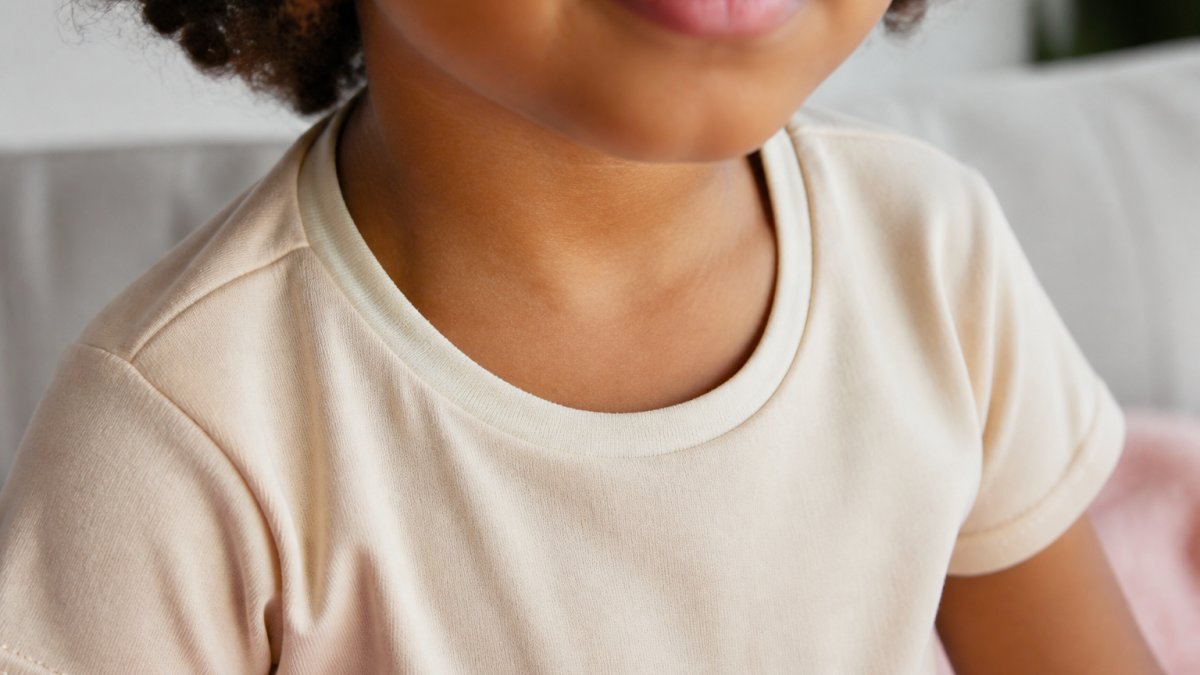
Seams are the biggest irritation culprit. Rough, exposed seams rub against skin with every movement. Flat seams or French seams distribute pressure across a wider area. Look for:
- Flat seams (stitching lies flat against fabric)
- Double-stitched seams (more durable, less fraying)
- Seams placed away from sensitive areas (neck, underarms, waistband)
- No visible loose threads or rough edges
Tags cause constant irritation. Many kids with sensitive skin can't tolerate any tag at all. Solutions include:
- Tagless labels printed directly on fabric
- Labels sewn inside the back neck (less rubbing than front)
- Soft, woven labels instead of plastic
- Removing tags carefully if necessary (cut the label, not the fabric)
Elastic and waistbands need attention too. Tight elastic cuts off circulation and creates pressure points. Looser elastic or drawstring waistbands reduce irritation. Soft elastic made from natural fibers irritates less than synthetic elastic.
Other construction details to check:
Taya Flowers Organic Cotton Kids Tee →
- Neckline binding (should be soft, not stiff)
- Sleeve cuffs (should be gentle, not tight)
- Overall fit (loose enough to move, not baggy)
- No plastic or synthetic coatings on fabric
Step 4: Choose Seamless Clothing for Sensitive Skin
Seamless clothing eliminates the friction that seams create. For children with severe eczema or extremely reactive skin, seamless options can be life-changing.
Seamless garments are constructed differently. Instead of cutting fabric pieces and stitching them together, seamless pieces are knit as one continuous garment. This means zero seams in high-friction areas like underarms, shoulders, and sides.
Benefits of seamless clothing:
- No seams to rub or irritate
- Better moisture management (no seam ridges trapping sweat)
- More freedom of movement
- Especially helpful for kids who fidget or have sensory sensitivities
Limitations to know:
- Seamless options are more expensive than standard construction
- Fewer style choices available
- May feel different initially (kids used to seams need adjustment time)
- Not always necessary if seams are well-constructed
For most kids with sensitive skin, well-made seamed clothing works fine. Reserve seamless options for children with severe eczema or those who can't tolerate any seam pressure.
Step 5: How to Wash New Clothes Before Wearing
New clothing contains chemical finishes from manufacturing and dyes that can irritate sensitive skin. Washing removes these irritants before your child wears the garment.
Wash new clothes separately before the first wear. Use these steps:
- Separate new items from existing laundry (loose dyes can transfer)
- Use fragrance-free, dye-free detergent (or plain water for first wash)
- Wash in warm water (hot water can set dyes; cold water doesn't remove chemicals as effectively)
- Run an extra rinse cycle to remove detergent residue
- Dry on low heat or air-dry to preserve fabric integrity
- Repeat washing 2-3 times for heavily dyed items before regular wear
Avoid these laundry practices:
- Fabric softeners (coat fabric and reduce breathability)
- Scented detergents (fragrance chemicals irritate skin)
- Bleach (breaks down fibers and irritates skin)
- High heat drying (damages fabric and concentrates chemical residue)
Choose detergents specifically formulated for sensitive skin. These products skip perfumes, dyes, and optical brighteners. Brands labeled "free and clear" or "hypoallergenic" are safer choices.
A practical tip: Wash all new clothing at least twice before regular wear, even if it doesn't visibly need it. You're removing invisible chemical finishes, not visible dirt.
Step 6: Consider Fit, Friction, and Moisture Management
How clothes fit affects comfort as much as what they're made from. Poor fit creates friction, traps moisture, and causes irritation even in quality fabrics.
Fit directly impacts friction. Tight clothes rub constantly. Loose clothes bunch and create pressure points.
Check fit in these areas:
- Shoulders (should sit on natural shoulder line, not pull)
- Chest and torso (should be snug but not tight)
- Armpits (should allow full arm movement without pulling)
- Waist and hips (should sit naturally, not pinch)
- Sleeves (should reach wrist without bunching at elbows)
How to Measure Kids for Clothes: Simple Sizing Guide teaches proper measurement techniques. Correct sizing prevents the friction that irritates sensitive skin.
Moisture management matters for skin health. Damp fabric against skin creates conditions for rashes and irritation. Breathable fabrics wick moisture away. Tight or synthetic fabrics trap sweat.
For active kids or warm weather:
- Choose lightweight, breathable fabrics
- Avoid tight elastic that restricts airflow
- Consider moisture-wicking properties
- Change into dry clothes promptly after activity
Temperature regulation prevents irritation too. Overheating triggers sweating and itching. Layering with breathable pieces lets you adjust without overheating.
Step 7: Test and Adjust for Individual Sensitivities
Every child's sensitive skin is different. What works for one child might irritate another. Testing and adjusting your approach is essential.
Start by introducing one new garment at a time. Wear it for a few hours, then observe. Does your child scratch more? Does skin look red or irritated?
Keep notes on what works and what doesn't:
| Garment Type | Fabric Content | Fit | Seam Style | Result |
|---|---|---|---|---|
| T-shirt | 100% organic cotton | Medium fit | Flat seams | No irritation |
| Long sleeve | Cotton blend (60/40) | Tight sleeves | Standard seams | Itching after 2 hours |
| Leggings | 100% cotton | Loose fit | Seamless | Comfortable all day |
This simple tracking helps you spot patterns. Maybe your child tolerates blended fabrics fine but hates tight sleeves. Maybe seamless construction isn't necessary. Maybe organic cotton makes no difference for their skin.
Common individual sensitivities:
- Dyes (some kids react to dark colors more than light)
- Specific fibers (one child tolerates polyester; another can't)
- Seam placement (neck seams bother some kids; underarm seams bother others)
- Elastic pressure (some kids need very loose waistbands)
- Fabric weight (some prefer thin, breathable; others need substantial)
Expect a few weeks of adjustment. Your child's skin will tell you what works. Once you identify the right fabrics, fit, and construction details, shopping becomes much easier.
Selecting clothes for sensitive skin requires attention to fabric, construction, fit, and care. Start with quality basics like the Taya Afro Puffs Kids Organic Cotton T-Shirt or Super Sistah Organic Cotton Kids T-Shirt, wash before wearing, and observe how your child's skin responds.
Frequently Asked Questions
What is the best fabric for clothes for sensitive skin?
Organic cotton and 100% cotton are the top choices for sensitive skin because they're breathable, soft, and free from harsh chemical finishes. Linen, silk, and hemp also work well for many children. Look for natural fibers rather than synthetic blends, which can trap heat and moisture. Organic options are especially beneficial because they're grown without pesticides, reducing the risk of chemical irritation. Always check the label to confirm fiber content before purchasing.
Why do clothes irritate sensitive skin?
Clothes irritate sensitive skin for several reasons: synthetic fibers trap moisture and heat, rough seams and tags cause friction and rubbing, chemical dyes and finishes remain on unwashed fabrics, and tight fits create pressure points. Fabric blends with low natural fiber content can also trigger redness, itching, and rash. Friction from movement, especially in active play, makes irritation worse. Washing new clothes before wearing removes many chemical finishes and reduces flare-ups significantly.
How should I wash new clothes before wearing them?
Wash new clothes in fragrance-free detergent using warm water on a gentle cycle, then rinse twice to remove all soap residue. Avoid fabric softeners and dryer sheets, which leave chemical coatings. Dry on low heat or air-dry to prevent damage. For items with sensitive skin concerns, consider an extra rinse. Wash before the first wear to remove dyes, finishes, and manufacturing residues. This simple step prevents most irritation and rash reactions in children with reactive skin.
What clothing features should I avoid for sensitive skin?
Avoid rough, raised seams; scratchy tags sewn directly into the neck or waistband; tight waistbands and elastic that dig in; synthetic fibers like polyester; and clothes with heavy chemical dyes or finishes. Four-way stretch fabrics with synthetic blends can trap sweat. Look instead for flat seams, tagless designs, loose fits that allow movement, and natural fiber content. Seamless construction is ideal. Check the inside of garments for smooth, comfortable details before buying.
